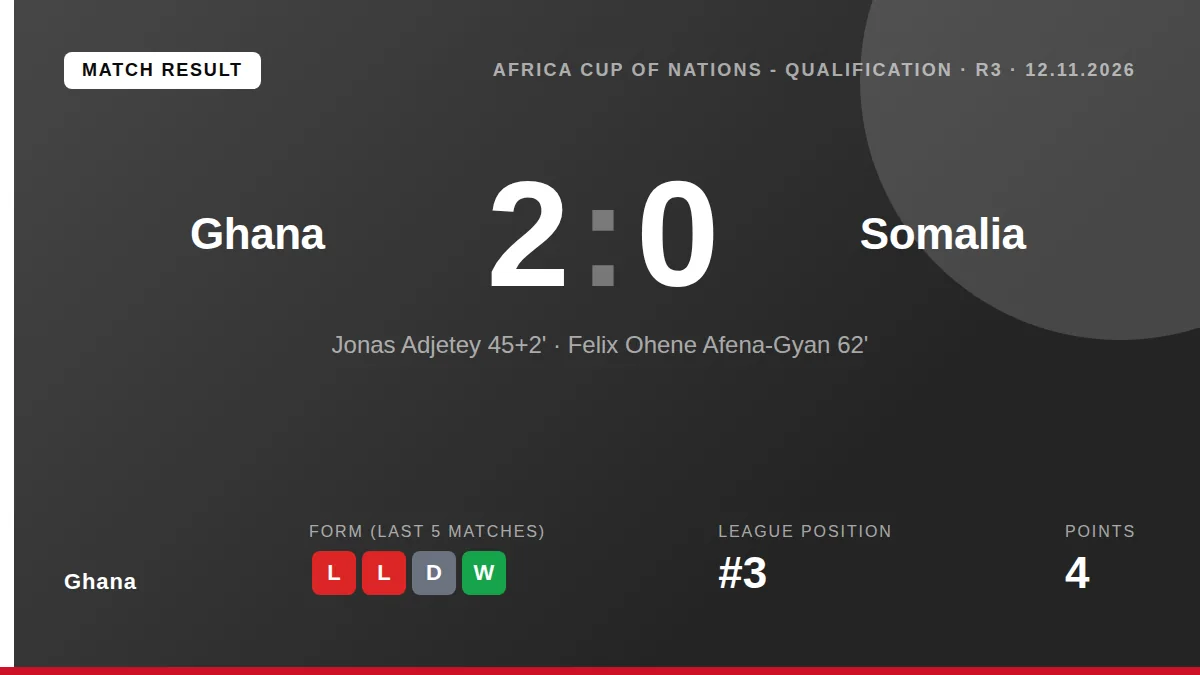

Ghana's 20 national football teams are all reliant on a single team bus that was purchased in 2008, a situation confirmed by the country's football association president. The revelation shows a major logistical challenge for the nation's football development as the Black Stars prepare for a World Cup qualifier against Somalia on 11 November.
GFA President Kurt Okraku made the statement, putting a stark figure on the resource constraints facing the federation. "Ghana’s 20 national teams share one bus procured in 2008," Okraku said. This fleet of one vehicle must serve the senior men's and women's teams, all age-group sides, and various other national selections for travel to matches, training camps, and other official engagements across the country.
Its continued use points to broader infrastructural issues within the national setup, even as the federation publicly discusses development and investment. This comes at a time when the senior men's team is focused on qualifying for the 2026 World Cup, with their next key match at home to Somalia.
Logistical strain on teams
Managing the schedule for a single bus between 20 different teams creates an obvious operational strain. Coordination becomes a complex task for team administrators, potentially impacting preparation and logistics for important matches. The situation is particularly poignant for the Black Stars, who carry the nation's highest footballing expectations. They are currently second in their World Cup qualifying group, making efficient preparation for games like the upcoming Somalia fixture all the more important. The full squad list for that match will be announced in the coming days.
Okraku's admission is a rare public acknowledgement of such a specific resource shortfall from a sitting federation president. It frames the ongoing debate about funding and support for national teams beyond the spotlight of the senior men's side. While the Black Stars and Black Queens often capture headlines, the development pathways for youth teams are fundamentally linked to having basic operational tools like reliable transport.
The context of this revelation is critical. Ghanaian football has seen periods of significant investment and sponsorship, but the longevity of this single bus suggests those resources have not trickled down to this fundamental area of team operations. The national teams' next engagement is the World Cup qualifier in Accra, where the focus will return to the pitch, but the infrastructure story will remain.
Read the full report at Modern Ghana