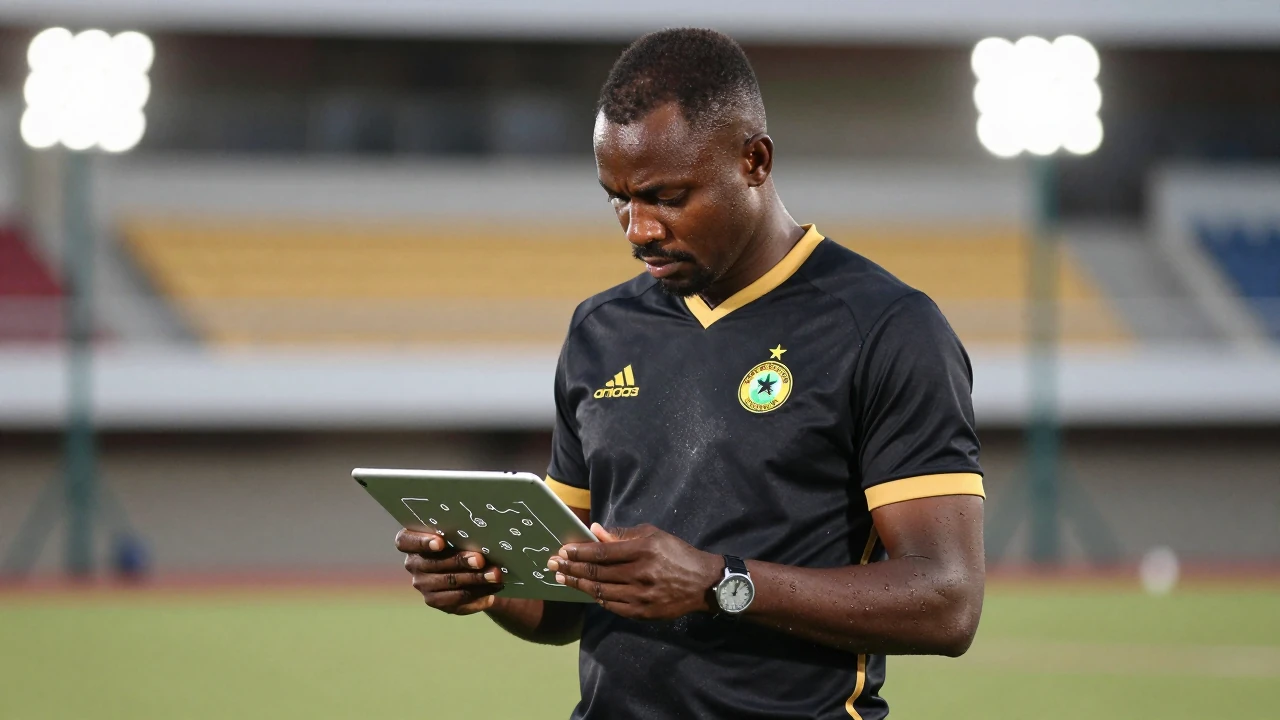
Evolving Ghana's Black Stars: Tactical Tweaks for Enhanced Performance
As the Black Stars gear up for the FIFA World Cup 2026, recent matches have showed both promise and areas needing improvement. While the squad has individual talent, a cohesive tactical approach is essential for achieving success on the world stage. Analyzing their recent performances reveals several tactical tweaks that could significantly enhance Ghana's competitiveness.
Defensive Solidity: Tightening the Backline
One of the most pressing issues observed in recent outings has been the vulnerability of Ghana's defense, particularly against quick counter-attacks. The backline often appears exposed, especially when wing-backs push forward without adequate support. To counter this, a more disciplined defensive structure is necessary. Transitioning to a back three with two wing-backs could provide better coverage, allowing the team to absorb pressure and launch counter-attacks more effectively. This formation could also enable a more fluid transition between defense and midfield, ensuring that the team maintains possession and reduces turnovers in dangerous areas.
Midfield Dynamics: Balancing Creativity and Structure
Ghana’s midfield has shown flashes of brilliance but often lacks the necessary balance between creativity and defensive responsibility. Currently, the midfield trio tends to become overly offensive, leaving gaps that opponents exploit. Introducing a more disciplined holding midfielder could provide stability and allow more freedom for creative players like Thomas Partey and Mohammed Kudus to express themselves. This tweak would not only enhance ball retention but also facilitate better link-up play between defense and attack, making it harder for opponents to break through the lines.
Attacking Synergy: Maximizing Forward Options
In the attacking third, Ghana has the potential to be lethal with the likes of Inaki Williams, Jordan Ayew, and Kamaldeen Sulemana. However, their attacking play often lacks cohesion, with players frequently isolated or making redundant runs. A more structured attacking approach could involve a fluid front three that interchanges positions, creating confusion for opposing defenses. Encouraging players to make overlapping runs and use width effectively can stretch defenses, allowing space for central players to exploit. Also, ensuring that the wide players track back will help maintain defensive integrity when possession is lost.
Set-Piece Strategy: Capitalizing on Opportunities
Set-pieces have historically been a strong area for Ghana, yet recent matches have indicated a decline in effectiveness. Revisiting set-piece strategies, especially corners and free-kicks, could yield significant advantages. Implementing varied routines that confuse defenders and use tall players such as Alexander Djiku for aerial duels can turn dead-ball situations into goal-scoring opportunities. Additionally, ensuring that players are well-prepared to defend against counter-attacks following set-pieces will minimize risk and maintain defensive solidity.
Conclusion: A Unified Vision for Success
As the Black Stars set their sights on World Cup 2026, embracing these tactical tweaks is key for enhancing their overall performance. A more robust defensive approach, balanced midfield dynamics, coherent attacking strategies, and revitalized set-piece execution will allow the team to harness its full potential. With the right adjustments, Ghana can not only compete but also make a deep run in the tournament, reigniting the passion of its fans and creating new memories on the global stage.