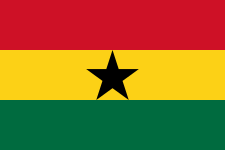
 Ghana Hub
As the international community turns its attention toward the 2026 FIFA World Cup, Rhode Island finds itself at the intersection of global sport, higher education, and regional development. Bryant University is serving as the official base camp and host institution for the Ghana National Football Team, the Black Stars. We are profoundly honored and proud to serve as their hosts, but doing so is more than merely an exercise in hospitality. By welcoming Team Ghana, Bryant University demonstrates how the infrastructure and intellectual capital of higher education can enhance economic growth and global connections. Institutions of higher learning generate public benefits when they can address broader regional and global priorities. Hosting a World Cup team shows the true metrics of institutional excellence are not confined to enrollment figures or endowment sizes, but in the ability of an institution to serve as a bridge between local and global communities, uniting academics, athletics, and economic development. International sport transcends geopolitical boundaries. Established in 1904, FIFA sought not simply to govern athletic competitions, but to utilize football as a universal language promoting cooperation, mutual respect, and human development. Though it has faced criticism about commercialization and political complexity, the core mandate of fostering global unity remains vital. Part of Bryant University’s mission is to serve as an engine of opportunity, equipping students with the global perspective and entrepreneurial mindset necessary to thrive in an increasingly dynamic, competitive and interconnected marketplace. Hosting Team Ghana on our campus aligns with our mission by providing a real-world laboratory for our students and faculty to engage with international sports management, cross-border logistics, and global marketing. It also sets the stage for long-term economic dialogue. Economic mobility can no longer be pursued solely within national borders; it requires active engagement with emerging global growth centers. Africa represents in many ways the future of global development. With the world’s youngest population and a rapidly expanding middle class, the continent is poised to become a primary driver of global consumption, technological innovation, and entrepreneurial activity. Ghana, recognized as one of the most stable and resilient nations in Africa, stands at the forefront of this transformation. For business leaders, public officials, and academic executives across New England, establishing deep, mutually beneficial relationships with African nations is a strategic necessity for maintaining regional competitiveness in the 21st century. After the World Cup, Bryant will continue to serve as a convening organization for connecting faculty, students, and alumni with Ghanaian entrepreneurs and academic institutions. These interactions will be structured to foster academic exchanges and catalyze economic opportunity, identifying new avenues for collaboration, trade and business development. It’s a clear example of how higher education extends beyond merely preparing a skilled workforce; it involves actively constructing the global networks and understanding that allow businesses and individuals to thrive globally. At a time when some question the return on investment and the societal relevance of higher education, skeptics may argue that the substantial investments, administrative focus, and logistical coordination required to host a World Cup team are not worth the costs. However, the benefits of hosting Team Ghana far outweigh the costs, and will have a lasting impact on the university and the region.
National Team
Ghana national football team's World Cup base camp shines at Bryant University
Bryant University hosts Ghana national football team for World Cup 2026, fostering global connections and economic growth.